


At the CDDA Safety Meeting on October 14, 2026, Meeting Chair Gil Huard presented the following safety share on behalf of Forage Orbit Garant, with permission to share it with our members. We thank Forage Orbit Garant for their commitment to the CDDA’s mission of promoting safety and industry standards. Members are invited to submit their own safety shares by emailing office@cdda.ca.
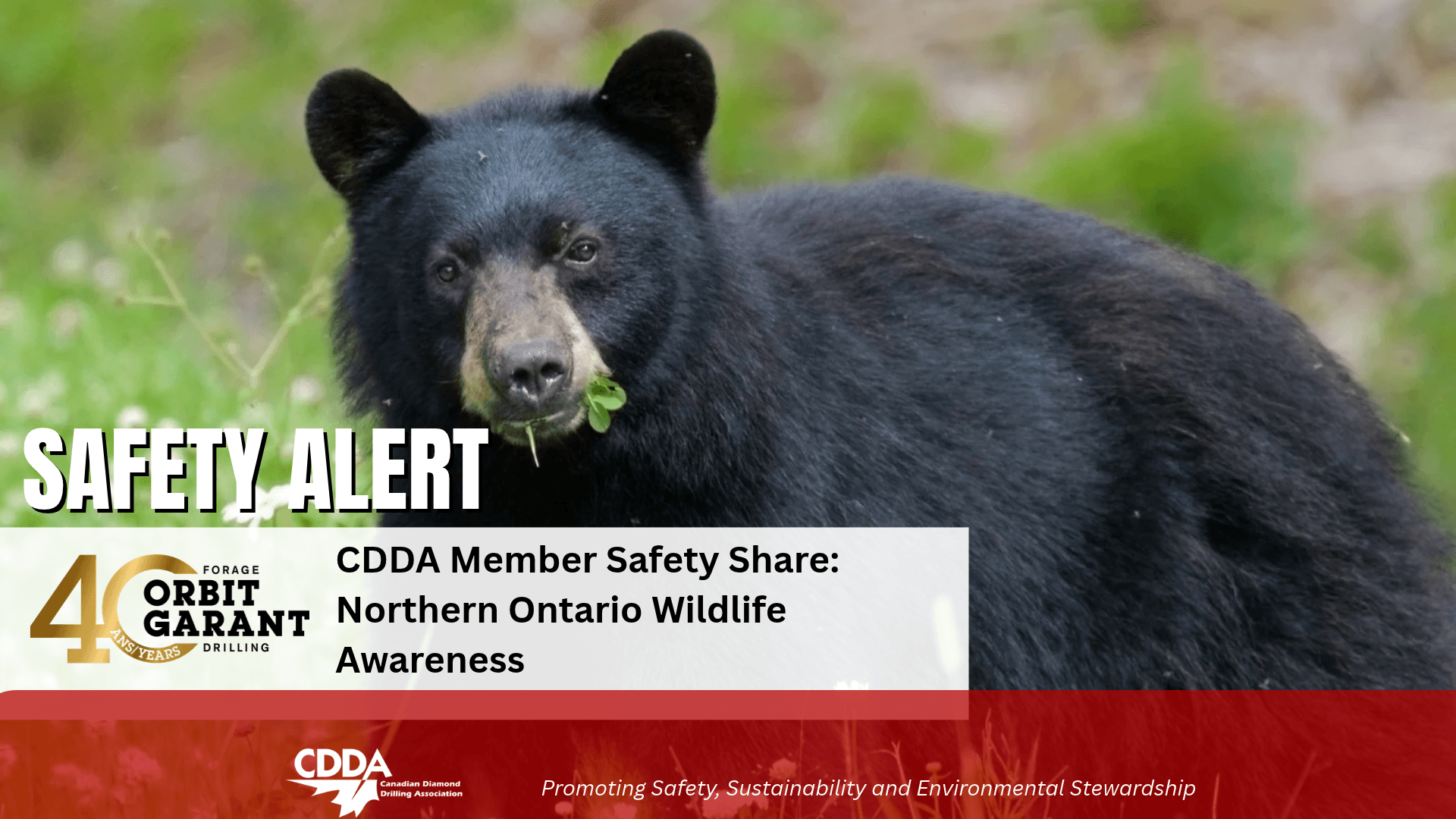
Northern Ontario is home to a variety of wildlife, including moose, black bears, wolves, deer, and smaller animals. While wildlife sightings can be exciting, they can also present serious safety hazards, especially when driving or working in remote areas.
Moose Safety
Moose are one of the biggest risks for travelers in Northern Ontario.
Moose are most active at dawn, dusk, and nighttime.
A mature moose can weigh over 1,000 lbs (450 kg).
Because of their height, collisions often result in the animal coming through the windshield, causing severe injuries.
- Reduce speed in signed wildlife zones.
- Use high beams when safe to do so.
- Scan road shoulders continuously.
- If a collision is unavoidable, brake firmly and stay in your lane.
Black Bear Safety
Black bears are common throughout Northern Ontario.
- Never feed bears or leave food accessible.
- Store food, garbage, and scented items securely when camping.
- Make noise when hiking to avoid surprising a bear.
- If you encounter a bear:
- Stay calm.
- Do not run.
- Back away slowly while facing the bear.
- Speak in a firm voice.
- If the bear approaches, make yourself appear large and prepare to use bear spray if available.
Deer and Other Wildlife
- Deer frequently cross roads unexpectedly.
- Wildlife often travels in groups, so where there is one animal, others may follow.
- Slow down in areas with heavy vegetation or near water sources.
Working in Remote Areas
- Let someone know your travel route and expected return time.
- Carry emergency supplies, including:
- First aid kit
- Flashlight
- Extra clothing
- Food and water
- Communication device
- Remain alert when exiting vehicles, especially near wooded areas.
Key Takeaway
Wildlife encounters are common in Northern Ontario. Staying alert, reducing speed in wildlife areas, and following safe practices around animals can prevent injuries and protect both people and wildlife.
Remember: The safest wildlife encounter is one where both you and the animal have space to avoid each other. Stay aware and travel safely.
We would like to thank Forage Orbit Garant Drilling for providing this resource and invite our members to share their safety alerts and resources by emailing office@cdda.ca. We welcome our members to join us at the next CDDA Virtual Safety Meeting November 12, 2026 Chaired by Board Member Chris Drenth.