



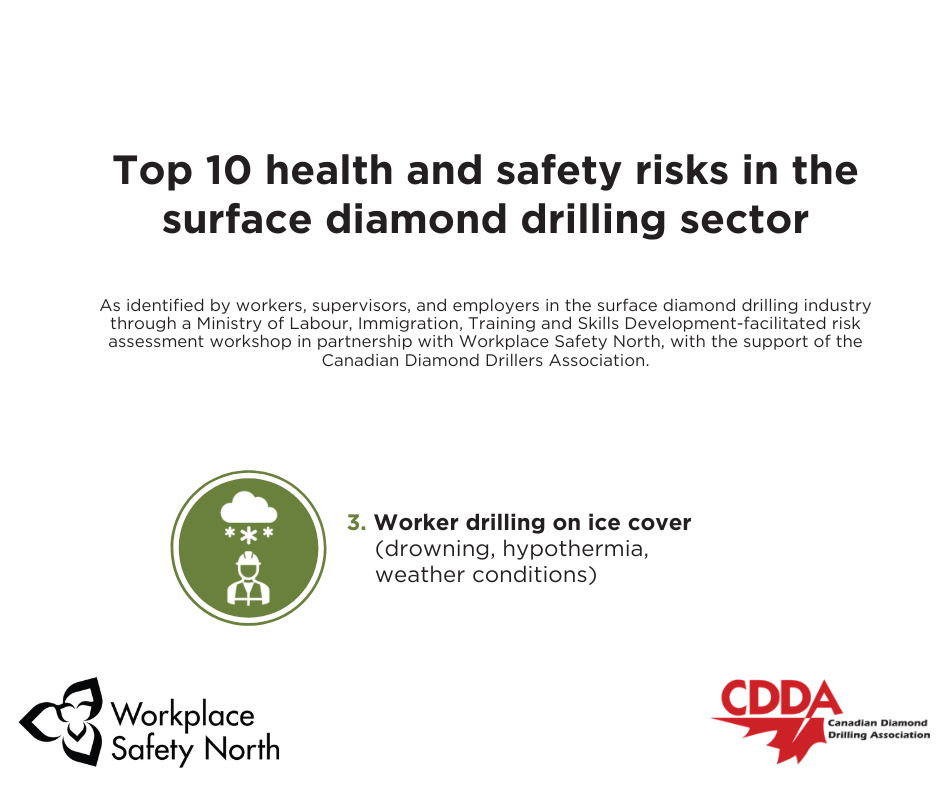
The Top 10 Health and Safety Risks in the Surface Diamond Drilling Sector were identified by workers, supervisors, and employers in the surface diamond drilling industry through a risk assessment workshop facilitated by Workplace Safety North, with the support of the Canadian Diamond Drillers Association.
Over the next 10 weeks, we’ll spotlight one of the top health and safety risks identified in this assessment—helping keep our industry informed, proactive, and safe. This week, we are spotlighting identified risk #3: Worker drilling on ice cover (drowning, hypothermia, weather conditions).
Why It Matters:
Drilling operations on ice-covered surfaces pose unique and potentially life-threatening hazards. Ice conditions can be unpredictable, affected by temperature fluctuations, water currents, and snow cover. Workers risk falling through weak or unstable ice, leading to drowning or severe hypothermia. Exposure to extreme cold, high winds, and rapidly changing weather conditions also increases the risk of frostbite, impaired decision-making, and other cold-related injuries.
Even experienced crews can be caught off guard if weather conditions deteriorate quickly or if ice assessments are overlooked.
What Can Be Done:
Mitigating the risks associated with ice cover requires thorough planning, equipment readiness, and real-time awareness:
-
Pre-Drill Ice Assessment: Conduct ice thickness and stability tests before moving equipment or personnel onto the surface. Follow established safety thresholds (e.g., minimum thickness for foot traffic and machinery).
-
Weather Monitoring: Monitor forecasts closely and have a clear plan for halting operations during storms, high winds, or extreme cold snaps.
-
Cold Weather PPE: Ensure all crew members are equipped with proper thermal PPE, including floatation gear where applicable.
-
Emergency Preparedness: Equip the site with life-saving gear and train workers in cold-water rescue protocols.
-
Limit Exposure: Rotate crews frequently and provide warm-up breaks to prevent cold stress and fatigue.
-
Communication: Maintain reliable communication systems to issue alerts and coordinate emergency response if needed.
About Workplace Safety North (WSN):
WSN is one of four sector-based health and safety associations in Ontario. Headquartered in northern Ontario, it provides province-wide, Ministry-approved training and services for the mining and forest products industries. As a trusted source for health and safety expertise, WSN supports businesses with training, consulting, and expert guidance.






Comments are closed.