



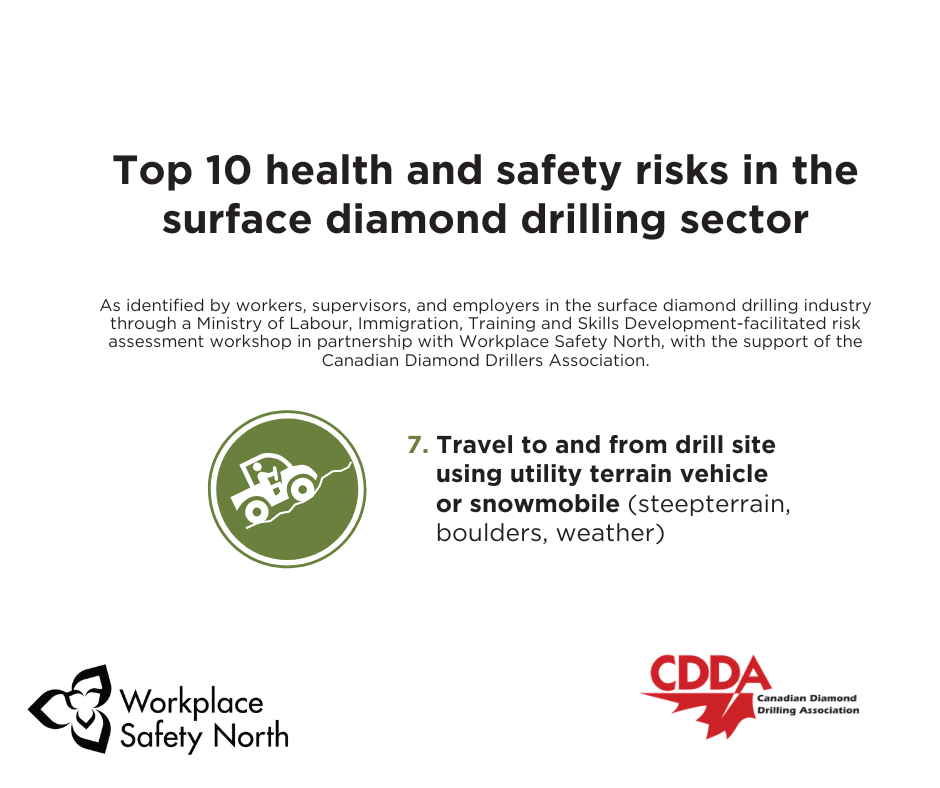
The Top 10 Health and Safety Risks in the Surface Diamond Drilling Sector were identified by workers, supervisors, and employers in a risk assessment workshop facilitated by Workplace Safety North, with the support of the Canadian Diamond Drilling Association.
Over the next weeks, we’re spotlighting one risk each week. This week’s focus: #7 Travel to and from drill site using utility terrain vehicle or snowmobile (steep terrain, boulders, weather)
Safe Travel to Drill Sites
Reaching remote drill sites often requires utility terrain vehicles or snowmobiles, which come with risks; steep terrain, hidden boulders, and sudden weather changes. These hazards can lead to rollovers, delays, or serious injuries.
What helps: proper operator training, route planning and inspection, equipment checks, weather monitoring, and strong communication systems. Crews should carry survival gear and use check-ins to stay connected.
Takeaway: Safe travel is just as important as safe drilling and planning ahead can prevent serious injuries.
About WSN:
Workplace Safety North (WSN) is a not-for-profit health and safety association funded by the provincial government to provide approved health and safety training and services to the mining and forest products industries. A trusted safety advisor, WSN and its legacy organizations have been helping make workplaces safer since 1915.
As part of WSN, Ontario Mine Rescue (OMR) provides training to mine rescue team members throughout the province to continuously improve the skills and knowledge of mine rescue techniques and procedures. Since its creation in 1929, OMR has established a reputation for excellence in emergency response.
Headquartered in northern Ontario, Workplace Safety North knows the day-to-day realities of Ontario’s resource industries. By including companies in research, risk assessments and root cause analyses, WSN builds and sustains close working relationships that ensure services and information stay relevant. View latest news and free resources.







Comments are closed.